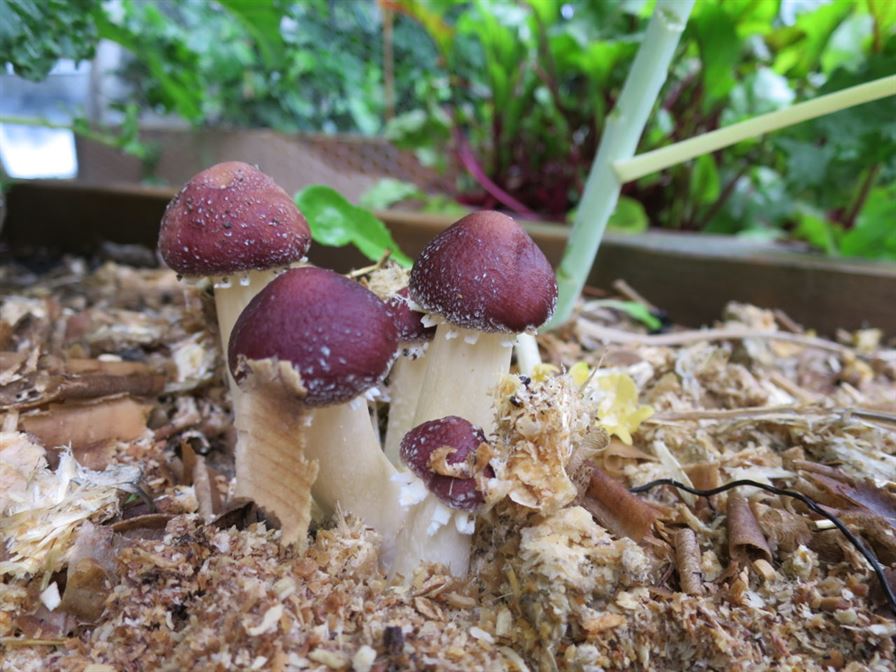
A wine cap mushroom culture, scientifically known as Stropharia rugosoannulata, is a type of edible mushroom that is highly regarded for its culinary and cultivation characteristics. Here’s a description of a wine cap mushroom culture:
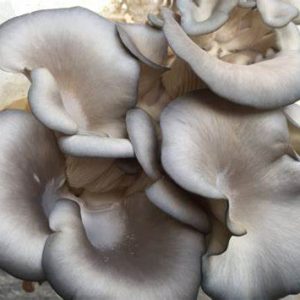
The wine cap mushroom has a distinctive appearance with a reddish-brown to wine-colored cap, hence its name. The cap can reach a diameter of 5 to 15 centimeters (2 to 6 inches) and has a convex shape when young, flattening out as it matures. The cap’s surface is often covered with fine scales, giving it a textured appearance.
Beneath the cap, the wine cap mushroom features crowded gills that are initially white, eventually turning purplish-brown as the mushroom matures. These gills are important for spore production and dispersal.
The stem of the wine cap mushroom is cylindrical, solid, and typically measures around 5 to 15 centimeters (2 to 6 inches) in length. It has a whitish color and often exhibits a ring or annulus near the top, which is the remnant of the veil that protected the developing gills.
Wine cap mushrooms are renowned for their ability to grow in a wide range of environments, including gardens, wood chips, compost piles, and mulched areas. They are considered saprotrophic, meaning they obtain their nutrients by breaking down organic matter such as wood chips, straw, and decaying plant material.
In terms of cultivation, establishing a wine cap mushroom culture involves inoculating a substrate with spawn. Common substrates include hardwood chips, sawdust, straw, or a combination of these materials. The spawn, which contains the mycelium (the vegetative part of the fungus), is mixed with the substrate and allowed to colonize over a period of several weeks.
Wine cap mushrooms are known for their rapid growth, and under optimal conditions, they can produce sizable harvests within a relatively short period. They are often cultivated outdoors due to their preference for natural environmental conditions and the ease of establishing a culture in outdoor settings.
When it comes to culinary uses, wine cap mushrooms are highly versatile. They have a firm texture, a mild nutty flavor, and a meaty consistency, making them suitable for various cooking methods. They can be sautéed, grilled, roasted, or used in soups, stews, and stir-fries.
Overall, a wine cap mushroom culture offers an opportunity to cultivate a delicious and visually striking edible mushroom species that thrives in diverse environments, making it a popular choice for home gardeners and mushroom enthusiasts.
Reviews
There are no reviews yet.